
The One-Model Problem: Why One Product Photo Cannot Represent Every Shopper
Introduction
Online fashion shopping has become highly visual, but many fashion ecommerce stores still rely on a relatively simple product presentation: one garment, one model, and a small selection of product photographs. While this approach can showcase the design, it cannot fully represent how the same clothing item may look on different shoppers. Customers have different heights, body proportions, skin tones, styles, and preferences, which means a single model cannot provide a complete picture of how a garment might appear when worn.
This creates what can be called the one-model problem. Shoppers are expected to look at a product photo and mentally imagine themselves wearing the same garment. For some customers, this may be relatively easy, but for others, the visual gap can create uncertainty about fit, proportions, styling, and overall appearance. Technologies such as Clothing AR and Virtual Try-On can help address this challenge by giving shoppers a more personalized way to visualize fashion products.
What Is the One-Model Problem?
The one-model problem occurs when a fashion product is represented primarily through photographs of one person. The model may demonstrate the garment clearly, but the image naturally reflects that individual’s body shape, height, proportions, and styling choices.
A shopper looking at the same product may have completely different proportions. A jacket that appears cropped on one model may look longer on another person. A dress that looks loose on one body type may appear more fitted on another. Even the position of sleeves, waistlines, hems, and shoulders can appear different depending on the wearer.
Product photography cannot realistically show every possible customer. This is why online fashion stores need additional ways to help shoppers understand how clothing could look on them.
Why One Product Photo Cannot Represent Every Shopper
Clothing is not a fixed visual object. Its appearance changes depending on the person wearing it. Factors such as height, body proportions, posture, garment size, and styling can all influence how the clothing is perceived.
A model photograph provides a useful reference, but it is only one reference. Customers still have to mentally translate what they see into their own appearance. This becomes particularly difficult when the product has a specific silhouette or fit, such as oversized jackets, fitted dresses, wide-leg trousers, cropped tops, or long coats.
The more dependent a garment is on proportions, the harder it can be for shoppers to make confident decisions from a single model image.
The Difference Between Product Visibility and Personal Relevance
Traditional fashion photography is primarily designed to show the product. It communicates colour, design, material, silhouette, and styling. However, showing a product clearly is not the same as making it personally relevant to every shopper.
A customer may understand exactly what a shirt looks like on the model and still wonder whether it will look good on them. They may ask themselves whether the length will work with their height, whether the shoulders will sit correctly, or whether the overall silhouette will suit their proportions.
This distinction is important for fashion ecommerce. Customers do not simply want to see the product. They want to understand how the product may translate to their own appearance.
How Clothing AR Creates a More Personalized Experience
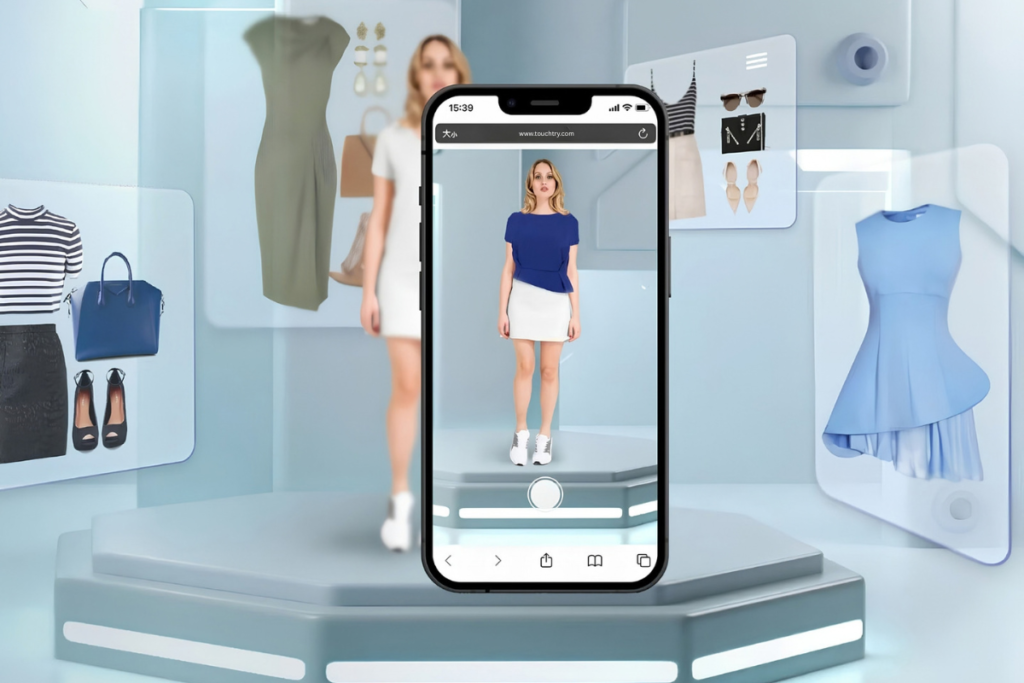
Clothing AR can provide shoppers with a more personalized way to visualize fashion. Instead of relying entirely on photographs of one model, customers can use an AR-based experience to see how a digital representation of the garment may appear on themselves.
This creates a different relationship between the shopper and the product. The customer is no longer only comparing themselves with a model. They are exploring the product in a context that is more relevant to their own appearance.
The purpose of Clothing AR is not to suggest that a digital visualization can perfectly predict the physical result. Instead, it can provide additional visual context that traditional product photography cannot easily offer.
Virtual Try-On Goes Beyond Showing Another Model
Adding more models to a product page can certainly provide more visual references. A fashion brand may show the same dress on models with different heights, sizes, or appearances. However, there is still a limit to how many people can be represented.
Virtual Try-On takes the concept further by allowing the shopper to become the visual reference. Rather than asking customers to find the model who most closely resembles them, the experience can help them visualize the product in relation to themselves.
This can make the shopping journey feel more interactive and personalized. Customers can explore a garment without depending entirely on whether their body type happens to match the model shown in the product photography.
Body Proportions Can Change How Clothing Looks
Two people can wear the same size and still have noticeably different proportions. One person may have a longer torso, another may have longer legs, and another may have broader shoulders or different waist-to-hip proportions.
These differences can affect how clothing appears. The same shirt may fall at different points on different bodies, while trousers may have a different visual balance depending on leg length.
This is one reason size labels alone cannot fully communicate how a garment will look. Clothing AR can provide an additional visual layer by helping shoppers understand the garment in relation to their own proportions.
Height Also Changes the Visual Experience
Height is another important factor in fashion presentation. A long coat shown on a tall model may appear dramatically different when worn by a shorter shopper. Similarly, a midi dress can appear closer to a maxi length depending on the customer’s height.
Customers often have to make these adjustments mentally when shopping online. Product descriptions may provide garment measurements, but numbers do not always translate easily into a visual understanding of the final appearance.
Virtual Try-On can help bridge part of this gap by providing a visual representation that is more connected to the shopper’s own body and proportions.
Skin Tone and Colour Perception
The way clothing colour is perceived can also vary depending on the overall visual context. A particular shade may appear different against different skin tones, lighting conditions, and surrounding colours.
One model photograph gives customers only one reference point. While professional photography aims for accurate colour representation, shoppers may still want to understand how a particular shade works with their own appearance.
Personalized visualization can give customers another perspective when evaluating colours and styling choices. This is especially useful for fashion products where colour plays a major role in the purchase decision.
Styling Is Another Part of the Problem
A model is usually photographed according to the brand’s chosen styling direction. The garment may be paired with specific shoes, accessories, hairstyles, or additional layers.
However, shoppers may have completely different styling preferences. Someone may want to wear a jacket with jeans, another customer may pair it with formal trousers, while someone else may style it with a dress.
Virtual Try-On experiences can become more valuable when they help shoppers think beyond the exact styling shown in the product photograph. This can encourage customers to visualize how a product might fit into their own wardrobe.
Building Confidence Without Replacing Product Information
Virtual Try-On should not replace essential ecommerce information. Customers still need accurate size charts, garment measurements, fabric details, care instructions, product photographs, and clear descriptions.
Instead, Clothing AR can complement this information. A size chart provides measurements, while virtual visualization provides additional visual context. Product photography shows the garment’s design, while AR can help customers understand how the product may appear in a more personalized setting.
Combining these elements creates a more complete product experience than relying on any single format.
Benefits for Fashion Ecommerce Brands
For fashion brands, addressing the one-model problem can create a more inclusive and informative shopping experience. Customers have different appearances and proportions, and giving them more ways to visualize products can reduce some of the uncertainty associated with online fashion shopping.
Virtual Try-On can also increase engagement because customers actively interact with the product rather than simply scrolling through photographs. This can make product pages more useful and encourage shoppers to spend more time exploring different garments.
For brands selling online across multiple markets, personalized visualization can also provide a scalable way to give customers additional context without requiring an enormous library of photos featuring every possible shopper.
The Role of Clothing AR in Reducing Visualization Gaps
The biggest value of Clothing AR is its ability to address a visualization gap that traditional photography cannot completely solve. A product image answers the question, “What does this garment look like on this model?” A virtual try-on experience can move the customer toward a more personal question: “How might this garment look on me?”
That distinction can be important when customers are deciding between products, colours, sizes, and styles. The more visual context a shopper has, the easier it can be to understand whether a product matches their expectations.
AR does not eliminate uncertainty completely, but it can provide another useful reference point within the decision-making process.
The Future of Personalized Fashion Shopping
The future of fashion ecommerce is likely to become increasingly personalized. Instead of presenting every customer with exactly the same product experience, brands can use technologies such as Virtual Try-On, Clothing AR, AI-powered recommendations, and interactive styling tools to create more relevant shopping journeys.
Customers may be able to explore garments across different looks, combinations, and visual representations before placing an order. Product pages could become less like digital catalogs and more like interactive styling environments.
For fashion brands, the opportunity is not simply to replace traditional photography. Product photography will remain important. The opportunity is to add personalized digital experiences that help shoppers understand products beyond the limitations of a single model.
Conclusion
The one-model problem highlights a fundamental limitation of traditional fashion ecommerce. A single model can demonstrate how a garment looks, but no individual model can represent every shopper’s height, proportions, appearance, or personal style.
Clothing AR and Virtual Try-On can help close this visualization gap by giving customers a more personalized way to explore fashion products. Instead of relying entirely on comparisons with a single model, shoppers can gain additional context about how a garment may look in relation to themselves.
For fashion ecommerce brands, the goal is not to abandon product photography but to complement it with interactive visualization. By combining high-quality images, accurate product information, and personalized virtual experiences, brands can create a shopping journey that is more informative, engaging, and relevant to a wider range of customers
Frequently Asked Questions (FAQs)
1. What is the one-model problem in fashion ecommerce?
The one-model problem refers to the limitation of showing a clothing product primarily on one model. Since shoppers have different heights, body proportions, skin tones, and personal styles, one product photo cannot show how the garment may appear on every customer.
2. How can Clothing AR help solve the one-model problem?
Clothing AR allows shoppers to visualize clothing in a more personalized context. Instead of relying only on a model’s appearance, customers can use AR to get a better idea of how a garment may look on themselves.
3. What is Virtual Try-On in fashion ecommerce?
Virtual Try-On is a technology that allows shoppers to digitally visualize clothing on themselves before purchasing. It provides an additional visual reference beyond traditional product photography and size charts.
4. Can Virtual Try-On help customers understand clothing proportions?
Yes. Virtual Try-On can provide additional visual context around garment length, silhouette, and proportions. This can be useful for products such as dresses, jackets, coats, trousers, and oversized clothing.
5. Is Clothing AR a replacement for product photos and size charts?
No. Clothing AR works alongside traditional product information. Product photos, measurements, size charts, fabric details, and descriptions remain important, while AR adds another layer of visual information.
6. Can Clothing AR help create a more inclusive shopping experience?
It can provide shoppers with a more personalized way to explore clothing rather than relying on a single model as the main visual reference. This can help customers with different appearances and proportions gain additional context before purchasing.