
The Visual Consistency Problem: Why the Same Sofa Looks Different Across Every Sales Channel
Introduction
In today’s omnichannel retail environment, furniture shoppers expect a consistent experience whether they browse a product on an e-commerce website, a marketplace, a social media advertisement, or a mobile app. However, many retailers face a common challenge: the same sofa often looks different across every sales channel. Variations in lighting, image quality, backgrounds, angles, and editing styles can create confusion, reduce customer confidence, and negatively impact purchasing decisions. Maintaining visual consistency has become essential for building trust and delivering a seamless shopping experience.
For furniture brands and retailers, inconsistent product visuals can lead to lower conversion rates, higher return rates, and weakened brand identity. Customers expect the product they receive to match what they saw online. Technologies such as high-quality 3D visualization and Furniture AR are helping brands solve this challenge by creating standardized product assets that deliver a consistent and realistic appearance across every digital touchpoint.
What Is the Visual Consistency Problem?
The visual consistency problem occurs when the same furniture product appears differently across various online platforms. A sofa may have different colors, textures, shadows, or proportions depending on where customers view it. These inconsistencies often result from different photography setups, editing techniques, compression settings, and platform-specific image requirements, making it difficult for shoppers to know what the product truly looks like.
Why Does the Same Sofa Look Different?
Several factors contribute to inconsistent product visuals across sales channels. Different lighting conditions, camera angles, image resolutions, and background environments can all change how a sofa appears. Social media platforms may compress images, while marketplaces often have unique image guidelines that affect presentation. Even small variations in editing or color correction can make fabrics and finishes appear significantly different, creating confusion for potential buyers.
How Inconsistent Visuals Affect Customer Trust
When shoppers notice differences between product images across multiple channels, they may question the accuracy of the listing and the reliability of the brand. If the sofa appears lighter on a website, darker on a marketplace, and more textured in an advertisement, customers may hesitate to purchase. This uncertainty reduces confidence, increases abandoned carts, and often results in higher product return rates because customer expectations do not match the delivered product.
How Furniture AR Solves the Problem
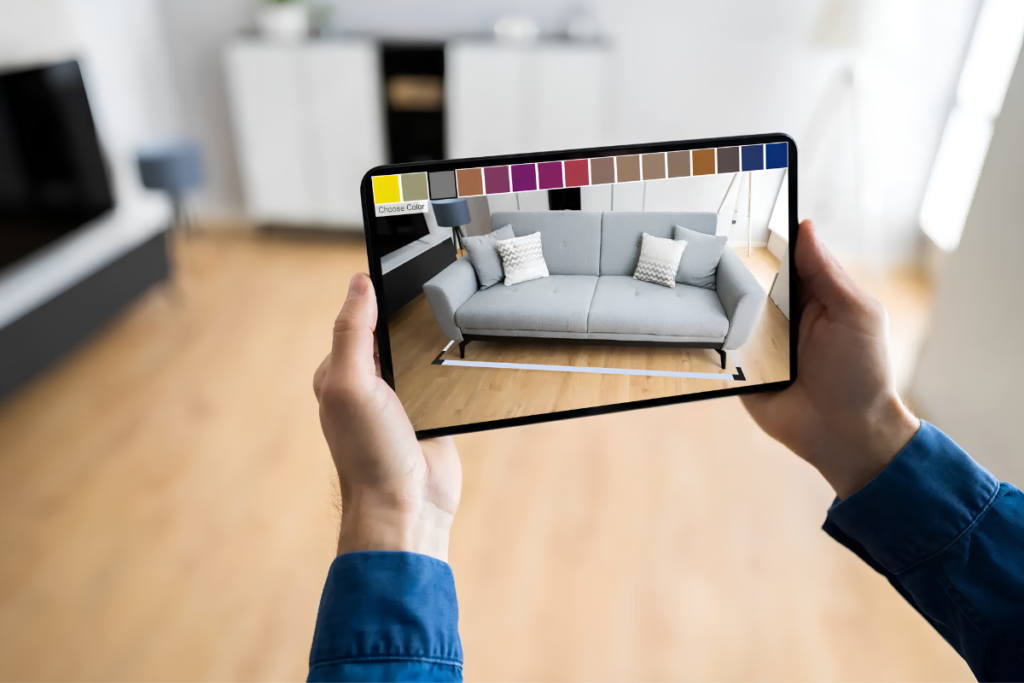
Furniture AR provides a more consistent way to present products by using standardized 3D models instead of relying solely on traditional photography. Customers can place the same virtual sofa inside their own room using augmented reality, allowing them to view accurate colors, proportions, and materials in real time. Because the same 3D asset can be used across websites, mobile apps, social media, and ecommerce platforms, brands can maintain a consistent product appearance regardless of where customers shop.
Benefits of Maintaining Visual Consistency
Consistent product visuals help customers make confident purchasing decisions while strengthening brand credibility. Retailers that maintain visual consistency often experience higher customer engagement, better conversion rates, and fewer product returns. A unified visual experience also improves brand recognition and creates a professional appearance across every sales channel, making it easier for shoppers to trust the products they see.
Best Practices for Consistent Furniture Product Presentation
Furniture retailers should create standardized product images and high-quality 3D models that can be reused across all marketing channels. Using consistent lighting, accurate color calibration, and uniform backgrounds helps maintain visual accuracy. Integrating Furniture AR into the shopping experience further enhances consistency by giving customers a realistic product preview that closely matches the final item delivered to their home.
The Future of Furniture Visualization
As e-commerce continues to evolve, retailers are moving beyond traditional product photography toward immersive visualization technologies. Furniture AR, AI-powered rendering, and interactive 3D product experiences are becoming essential tools for delivering consistent visuals across websites, marketplaces, mobile apps, and advertising campaigns. Brands that invest in these technologies will be better positioned to build customer trust and stay competitive in the digital furniture market.
Conclusion
The visual consistency problem is one of the biggest challenges facing modern furniture retailers. When the same sofa looks different across multiple sales channels, customer confidence declines and purchasing decisions become more difficult. By adopting standardized visual assets and Furniture AR, brands can present products consistently, improve customer trust, reduce returns, and create a seamless omnichannel shopping experience. As consumer expectations continue to rise, visual consistency will play an increasingly important role in the success of furniture ecommerce businesses.
Frequently Asked Questions (FAQs)
1. What is the visual consistency problem in furniture ecommerce?
The visual consistency problem occurs when the same furniture product, such as a sofa, appears different across websites, marketplaces, social media, and advertisements due to variations in lighting, image editing, backgrounds, or platform requirements.
2. Why does the same sofa look different across sales channels?
Differences in photography, lighting conditions, color correction, image compression, and platform-specific image guidelines can make the same sofa appear inconsistent across different channels.
3. How does Furniture AR improve visual consistency?
Furniture AR uses standardized 3D models to display products consistently across websites, mobile apps, and marketing channels. Customers can also visualize the sofa in their own space, creating a more accurate shopping experience.
4. Does Virtual Try-On work for prescription glasses and sunglasses?
Consistent product visuals help customers feel confident that the item they receive will match what they saw online. This builds trust, reduces purchase hesitation, and improves the overall shopping experience.
5. Can visual consistency reduce furniture returns?
Yes. When customers see accurate and consistent product visuals across all sales channels, they are less likely to experience mismatched expectations, resulting in fewer returns and exchanges.
6. Why should furniture brands invest in Furniture AR?
Furniture AR helps brands deliver consistent product visualization, increase customer confidence, improve conversion rates, reduce return rates, and create a seamless omnichannel shopping experience.