
AI Clothes Try-On vs AR Clothes Try-On: What Is the Difference?
The fashion ecommerce industry is rapidly changing as brands look for better ways to help customers shop confidently online. Traditional product images and size charts are often not enough because shoppers still struggle to understand how clothing will look, fit, and suit their personal style. This is where advanced technologies like AI and Augmented Reality (AR) are transforming online fashion experiences. However, many people confuse AI Clothes Try-On vs AR Clothes Try-On because both technologies aim to improve virtual shopping.
While both solutions help customers visualize clothing before purchasing, they work differently and solve different problems. AI clothes try-on focuses on generating realistic images of a person wearing clothing, while AR clothes try-on uses real-time camera technology to overlay digital clothing onto the user’s body. Understanding the difference helps fashion brands choose the right technology for improving customer experience, reducing returns, and increasing ecommerce conversions.
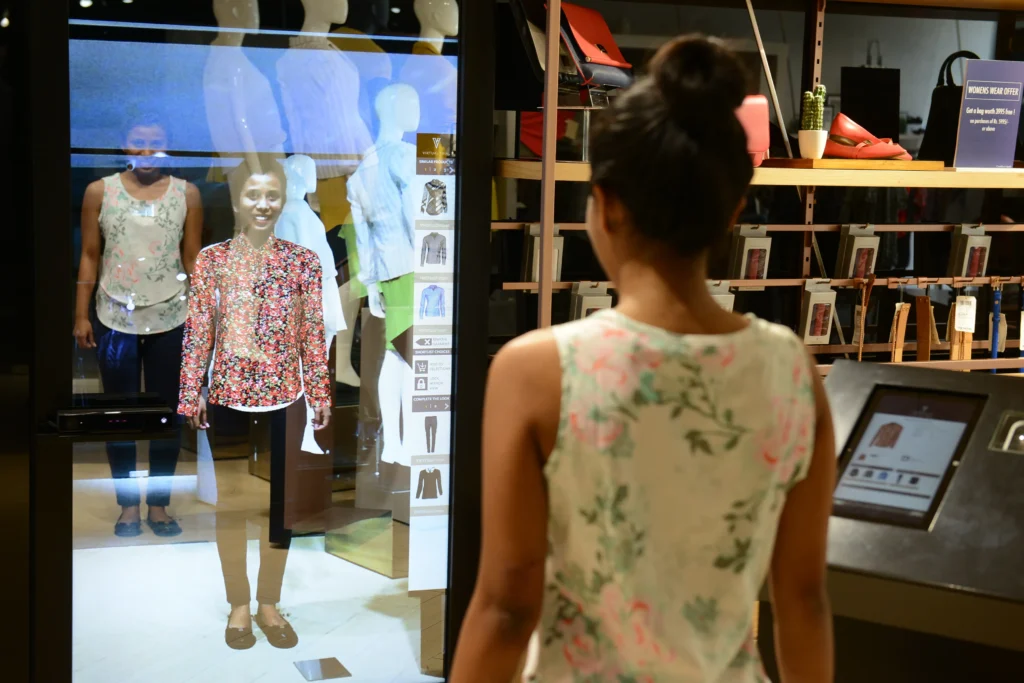
What Is AI Clothes Try-On?
AI Clothes Try-On is a technology that uses artificial intelligence, machine learning, and computer vision to digitally place clothing onto a person’s image. Instead of simply showing a product photo, AI can generate a realistic preview of how a garment may look when worn.
AI-powered systems analyze factors such as body shape, pose, clothing structure, and fabric appearance to create a virtual image of the customer wearing the selected outfit.
AI clothes try-on can help shoppers:
- Visualize different outfits
- Explore multiple styles quickly
- See clothing combinations
- Generate personalized fashion recommendations
- Discover new looks based on preferences
This technology is especially useful for fashion inspiration, personalized recommendations, and online styling experiences.
What Is AR Clothes Try-On?
AR Clothes Try-On uses augmented reality technology to show virtual clothing on a customer’s live camera view. Instead of generating a new image, AR overlays digital clothing onto the user’s real-time video or camera feed.
Customers can stand in front of their smartphone camera and see how clothing appears on their body while moving naturally.
AR clothes try-on allows shoppers to:
- Preview outfits in real time
- Check overall appearance
- Compare different products instantly
- Interact with clothing before buying
- Experience a virtual fitting room
This makes AR especially valuable for ecommerce brands that want to create a more interactive shopping experience.
AI Clothes Try-On vs AR Clothes Try-On: Key Difference
The biggest difference between AI and AR clothes try-on is how they create the experience.
AI focuses on generating realistic visuals, while AR focuses on real-time interactive visualization.
AI Clothes Try-On:
- Creates generated images
- Uses artificial intelligence models
- Works mainly with uploaded photos
- Good for styling and recommendations
- Creates realistic fashion previews
AR Clothes Try-On:
- Uses live camera interaction
- Places clothing in real time
- Provides an interactive experience
- Helps customers evaluate appearance instantly
- Works like a virtual fitting room
Customer Experience Comparison
When comparing AI Clothes Try-On vs AR Clothes Try-On, customer experience is one of the most important factors.
AI try-on provides a creative and personalized experience where customers can imagine different fashion styles. It is useful when shoppers want inspiration or want to explore how different outfits might look.
AR try-on creates a more realistic shopping experience because customers can see themselves wearing clothing instantly through their camera. This helps reduce uncertainty during the buying process.
For ecommerce brands, AR often creates stronger product interaction because customers actively engage with products before checkout.
Which Technology Helps Reduce Clothing Returns?
Fashion ecommerce faces high return rates because customers often receive products that do not match their expectations. Size, fit, and appearance are common reasons behind returns.
Both AI and AR can help reduce returns, but they work differently.
AI Clothes Try-On Helps By:
- Showing possible outfit appearances
- Providing style recommendations
- Helping customers discover suitable products
AR Clothes Try-On Helps By:
- Showing clothing in real-time
- Improving fit confidence
- Helping customers understand appearance
- Reducing uncertainty before purchase
For brands focused on reducing returns caused by fit and appearance concerns, AR clothes try-on can provide a stronger solution.
Conversion Benefits for Fashion Ecommerce
Online fashion brands need technologies that not only attract customers but also encourage purchases. Interactive experiences can improve engagement and increase buying confidence.
Benefits of AI Clothes Try-On:
- Personalized recommendations
- Better product discovery
- Increased engagement
- Improved styling experience
Benefits of AR Clothes Try-On:
- Higher product interaction
- Better purchase confidence
- Reduced hesitation
- Improved conversion potential
Many fashion brands are combining AI and AR to create complete shopping experiences.
Which Technology Is Better for Fashion Brands?
The right choice depends on the brand’s goals.
AI Clothes Try-On Is Better For:
- Fashion inspiration
- Personalized styling
- Outfit generation
- Product discovery
- Content creation
AR Clothes Try-On Is Better For:
- Virtual fitting rooms
- Real-time product visualization
- Ecommerce conversion improvement
- Reducing purchase hesitation
- Improving customer confidenc
Brands that want to help customers make final purchase decisions may benefit more from AR experiences.
Can AI and AR Work Together?
Instead of choosing only one technology, many fashion brands are combining AI and AR to create more powerful shopping experiences.
For example:
AI can recommend outfits based on customer preferences, while AR allows customers to virtually try those recommended clothes before purchasing.
This combination creates a complete personalized shopping journey:
- AI discovers what customers may like
- AR shows how products look on them
- Customers purchase with more confidence
The future of fashion ecommerce will likely involve both technologies working together.
Future of Virtual Clothing Try-On
The future of AI Clothes Try-On vs AR Clothes Try-On will continue evolving as artificial intelligence, computer vision, and 3D technologies improve.
Future innovations may include:
- More accurate body tracking
- Realistic fabric movement
- AI-powered size prediction
- Personalized digital avatars
- Virtual fashion assistants
- Complete online fitting rooms
As customer expectations increase, virtual try-on technology will become a standard feature for fashion ecommerce brands.
Conclusion
Understanding AI Clothes Try-On vs AR Clothes Try-On is important for fashion brands looking to improve their online shopping experience. AI clothes try-on focuses on generating realistic fashion previews and personalized recommendations, while AR clothes try-on provides real-time interactive product visualization. Both technologies offer valuable benefits, but AR is often more effective for helping customers make confident purchase decisions. By combining AI personalization with AR visualization, fashion brands can create better customer experiences, reduce returns, and increase ecommerce conversions.
FAQ
1 What is the difference between AI Clothes Try-On and AR Clothes Try-On?
AI Clothes Try-On uses artificial intelligence to generate realistic images of customers wearing different outfits, while AR Clothes Try-On uses augmented reality to display virtual clothing on the user’s body in real time through a camera.
2 Which is better for fashion ecommerce: AI Clothes Try-On or AR Clothes Try-On?
Both technologies have different benefits. AI Clothes Try-On is useful for personalized styling and outfit recommendations, while AR Clothes Try-On is better for interactive fitting experiences and helping customers make confident purchase decisions.
3 How does AR Clothes Try-On improve online clothing shopping?
AR Clothes Try-On allows shoppers to see how clothes look on them before buying, which reduces uncertainty, improves engagement, and increases confidence during the purchase journey.
4 Can AI and AR together improve fashion ecommerce?
Yes, combining AI and AR creates a more complete shopping experience. AI can recommend suitable outfits, while AR allows customers to virtually try those products before purchasing.
5 Does virtual try-on technology reduce clothing returns?
Yes, virtual try-on helps customers understand product appearance, style, and fit better, reducing the chances of buying products that do not meet expectations.
6 Is AR Clothes Try-On better for reducing purchase hesitation?
Yes, AR provides a real-time visualization experience that helps shoppers see themselves wearing a product, making it easier to decide before checkout.
7 Do customers need an app for AI or AR Clothes Try-On?
Not always. Many modern AR solutions work through WebAR, allowing customers to try clothing directly from a browser without downloading an app.
8 What is the future of AI and AR in fashion ecommerce?
The future will combine AI recommendations, AR virtual fitting rooms, personalized avatars, and advanced size prediction to create more realistic and personalized online shopping experiences.