
The Jewelry Layering Problem: Shoppers Rarely Wear One Piece in Isolation
Introduction
When shoppers buy jewelry online, they are rarely thinking about one piece completely on its own. A necklace may be worn with another chain, a ring may be paired with a wedding band, or a bracelet may be combined with a watch. Jewelry is often part of a larger personal style, and customers want to know how different pieces will look together before they decide to buy. Yet most ecommerce product pages show each item separately, creating a gap between how jewelry is presented online and how it is actually worn.
This creates what can be called the jewelry layering problem. Customers may love an individual necklace, ring, bracelet, or pair of earrings, but they may still hesitate because they cannot easily visualize how it will work with pieces they already own. Product photography can show details and craftsmanship, but it does not always answer the more practical question: “How will this piece look when I wear it with my other jewelry?” This is where Jewelry AR and virtual try-on technology can provide a more realistic shopping
What Is the Jewelry Layering Problem?
The jewelry layering problem is the difficulty shoppers face when trying to understand how multiple jewelry pieces will look when worn together. Online stores usually organize products individually. A necklace has its own product page, a ring has another, and bracelets or watches may appear separately. This structure makes sense from a catalog perspective, but it does not necessarily match the way customers make styling decisions.
For example, someone shopping for a gold necklace may already own a shorter chain and want to add another piece. The customer needs to understand the length, spacing, pendant position, colour, and overall visual balance between the two necklaces. A standard product image of the new necklace may not provide enough information to make that decision confidently.
The same challenge appears with rings. Customers may want to combine an engagement ring with a wedding band or stack multiple rings across the same hand. Seeing each ring separately does not always communicate how the pieces will interact when worn together.
Why Jewelry Is Rarely Worn in Isolation
Jewelry is closely connected to personal styling. Unlike many products that are used individually, jewelry can be combined in many different ways depending on the occasion, outfit, and personal preference. Customers may layer delicate necklaces, stack rings, combine bracelets, or mix metals to create a particular look.
This means the value of a jewelry product is not always determined by its standalone appearance. Its compatibility with other pieces can also influence the buying decision. A necklace that looks beautiful by itself may not be the right choice if its length clashes with another necklace the customer regularly wears.
Online shopping makes this harder because customers cannot easily experiment with combinations in the same way they can in a physical jewelry store. They have to mentally combine separate product images and imagine the final result.
Why Traditional Jewelry Photography Has Limitations
High-quality product photography remains essential for jewelry ecommerce. Close-up images can show gemstones, metal finishes, textures, craftsmanship, and small design details. Lifestyle photography can also show how a piece looks when worn.
However, most product photography still focuses on the individual item being sold. Even when a model is wearing the jewelry, the image may not show multiple combinations or different layering possibilities. Customers are therefore left to imagine how the piece will work with their existing collection.
This becomes especially challenging for minimalist jewelry, where small differences in chain length, ring width, or bracelet size can significantly affect the overall look. A product image can show what the item is, but shoppers may still need help understanding how it fits into their personal styling choices.
How Jewelry AR Can Change the Experience
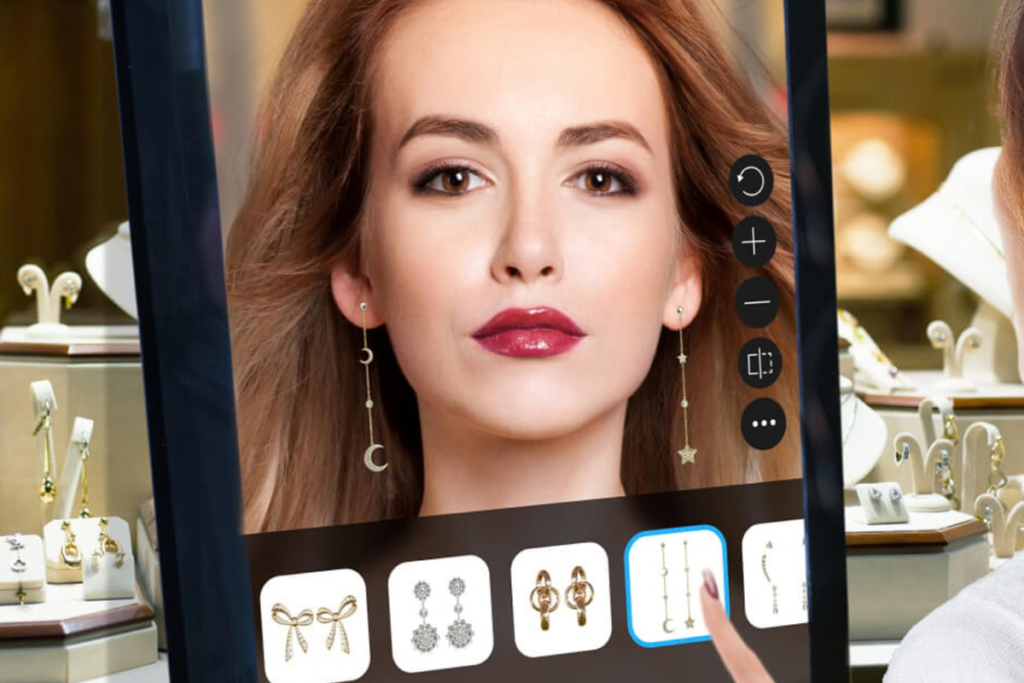
Jewelry AR allows shoppers to visualize jewelry digitally on themselves using a compatible device. Instead of viewing a necklace, ring, or bracelet only against a white background, customers can see how it appears when worn.
For layering, this becomes even more useful when shoppers can explore multiple pieces together. A customer could potentially visualize a new necklace alongside another chain, or see how different rings appear when stacked. This gives shoppers a more practical understanding of proportions, positioning, and overall styling.
The purpose is not simply to make jewelry shopping more interactive. The bigger opportunity is to give customers visual information that traditional product pages often cannot provide.
Necklace Layering and Chain Length
Necklace layering is one of the clearest examples of this problem. Customers may combine chains of different lengths, pendant styles, thicknesses, and materials. The final look depends heavily on how these elements are positioned relative to one another.
A necklace that looks ideal on its own may sit too close to another chain or create an arrangement that the shopper does not prefer. Customers may therefore hesitate to purchase because they cannot predict the final appearance.
Virtual jewelry try-on can help shoppers visualize these differences. If a customer can see different necklace lengths and combinations on their own body, they have more context for deciding whether a particular piece complements their existing jewelry.
Ring Stacking Creates a Similar Challenge
Ring stacking is another area where individual product images can leave customers uncertain. A ring may look perfect when viewed separately, but shoppers may want to wear it alongside another ring or combine multiple bands.
The spacing between rings, band thickness, gemstone size, and overall design can change the appearance of the complete stack. Customers need to understand not only how one ring looks but also how it interacts with the others.
Jewelry AR can help by giving shoppers a visual representation of different ring combinations. This can make the process of exploring styles more intuitive and reduce the need for customers to mentally assemble the final look.
Bracelet and Watch Pairing
Layering is not limited to necklaces and rings. Many customers wear bracelets alongside watches or combine multiple bracelets on the same wrist. Here again, individual product photography does not always communicate how the pieces will look together.
The size and proportions of each item matter. A wide bracelet may dominate a smaller watch, while several delicate bracelets may create a completely different appearance. Seeing individual products separately makes these relationships difficult to judge.
A virtual try-on experience can help shoppers understand how different pieces occupy the same space. This can be particularly valuable for brands selling bracelets, bangles, watches, and other wrist accessories.
Mixing Gold, Silver, and Rose Gold
Jewelry layering also creates questions around metal combinations. Some shoppers prefer to stay with one metal, while others intentionally mix gold, silver, and rose gold. The final result depends on the design, proportions, and placement of the individual pieces.
Traditional product pages can make this decision difficult because each item is usually presented independently. Customers may understand the colour of the metal but still be uncertain about how multiple finishes will work together.
Interactive visualization can allow shoppers to experiment with combinations before purchasing. This gives them an opportunity to explore different styling possibilities rather than relying entirely on imagination.
Building Customer Confidence Before Purchase
Jewelry is often associated with emotional purchases and significant spending. Customers want to feel confident that the piece they are choosing will look right when they actually wear it. Layering uncertainty can create an additional reason to delay a purchase.
Virtual try-on can reduce some of this uncertainty by showing the jewelry in a more relevant context. Instead of asking customers to imagine the final look from separate product images, brands can give them an opportunity to visualize the product as part of a complete styling combination.
This does not replace product specifications, measurements, material information, or high-quality photography. Instead, it adds another layer of information that helps shoppers understand the product from a wearer’s perspective.
How Jewelry Brands Can Use AR for Layering
Jewelry brands can make layering experiences more useful by connecting related products. For example, a necklace product page could recommend complementary chains, pendants, or earrings that can be visualized together. A ring page could show compatible bands or stacking options.
The experience becomes more valuable when customers can change combinations easily. Instead of moving between multiple product pages and trying to remember what each item looks like, shoppers can explore different combinations within a connected visual experience.
Brands can also use lifestyle collections to demonstrate common combinations. Showing a complete layered look can inspire customers while giving them a clearer idea of how individual products contribute to the final style.
Jewelry AR Can Support Cross-Selling
Layering also creates an opportunity for jewelry brands to introduce complementary products naturally. When a shopper is considering one necklace, showing how another chain works with it can introduce an additional product without relying solely on traditional recommendations.
The same approach can work with rings, bracelets, earrings, and other accessories. Instead of presenting complementary products as unrelated recommendations, brands can demonstrate how they work together visually.
This can make cross-selling more relevant because the customer can understand the reason behind the recommendation. They are not simply being shown another product; they are being shown another possible part of the look.
The Future of Layered Jewelry Shopping
As ecommerce becomes more visual and interactive, jewelry shopping can move beyond individual product presentation. Customers may increasingly expect tools that allow them to experiment with complete looks before purchasing.
Future Jewelry AR experiences could allow shoppers to build complete combinations across necklaces, rings, bracelets, earrings, and watches. Customers could change styles, colours, sizes, and combinations while seeing the result in real time.
For jewelry brands, this creates an opportunity to make online shopping feel more like the styling experience customers receive in a physical store. Rather than asking shoppers to make decisions from isolated product pages, brands can help them understand how multiple products work together.
Conclusion
The jewelry layering problem exists because jewelry is rarely worn as a completely isolated product. Customers often combine multiple pieces to create a personal look, yet ecommerce product pages frequently present those pieces one at a time.
This creates a visualization gap between how jewelry is sold online and how it is actually worn. Jewelry AR and virtual jewelry try-on can help close that gap by allowing shoppers to see individual pieces in context and explore combinations before making a purchase.
For jewelry brands, the opportunity is not simply to provide a virtual try-on button. It is to create a more complete styling experience where customers can discover, combine, compare, and visualize jewelry in a way that reflects how they actually wear it.
Frequently Asked Questions (FAQs)
1. What is the jewelry layering problem?
The jewelry layering problem refers to the difficulty shoppers face when trying to understand how multiple jewelry pieces will look when worn together. Individual product images often do not show how necklaces, rings, bracelets, or other pieces interact when layered.
2. How can Jewelry AR help with jewelry layering?
Jewelry AR allows shoppers to visualize jewelry on themselves and explore how different pieces may look together. This can make it easier to compare combinations and understand proportions, placement, and overall styling.
3. Can virtual try-on show multiple jewelry pieces together?
Yes. Depending on the technology and implementation, virtual jewelry try-on can help shoppers visualize combinations such as layered necklaces, stacked rings, or bracelets worn alongside a watch.
4. Why is necklace layering difficult when shopping online?
Necklace layering depends on factors such as chain length, pendant size, thickness, and spacing. A single product image may not show how a new necklace will look alongside pieces the customer already owns.
5. Can Jewelry AR help customers with ring stacking?
Yes. Jewelry AR can help shoppers visualize how different rings may appear when worn together. This can make it easier to understand the relationship between band width, gemstones, spacing, and overall appearance.
6. Can Jewelry AR help customers mix different metal colours?
Jewelry AR can give shoppers a visual way to explore combinations of gold, silver, and rose gold. Seeing different pieces together can help customers understand how mixed-metal styles may look before purchasing.