
The Ring Confidence Gap: Why Customers Need More Than a Size Chart
Introduction
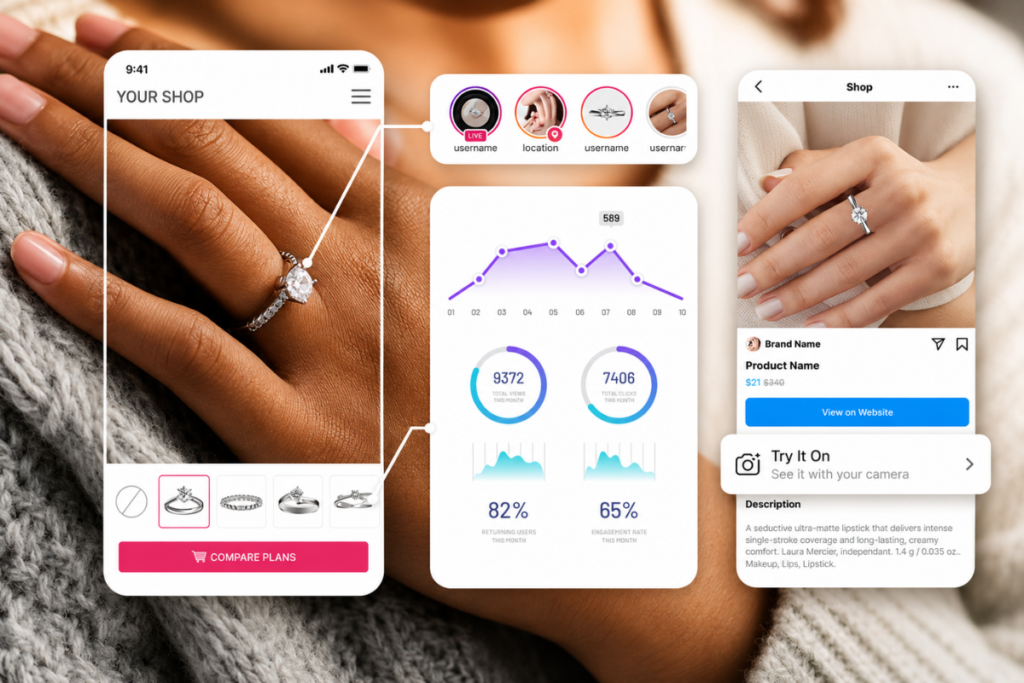
Buying a ring online should be simple, but for many customers it is a decision filled with uncertainty. A size chart can tell shoppers whether a ring is likely to fit, but it cannot show how the ring will actually look on their finger. Customers may wonder whether the band will appear too wide, whether a gemstone will look proportional, or whether the design suits their personal style. This uncertainty creates what can be called the ring confidence gap.
For online jewelry brands, solving this gap is important because rings are highly visual and personal products. Customers want to feel confident before spending money, especially when purchasing engagement rings, wedding bands, luxury jewelry, or customized designs. Technologies such as Jewelry AR and virtual ring try-on can provide a more interactive experience by allowing shoppers to visualize rings on their own hands before making a purchase.
What Is the Ring Confidence Gap?
The ring confidence gap is the uncertainty customers experience when they cannot physically try a ring before buying it online. A traditional product page may include photographs, measurements, descriptions, and a size guide, but these details do not always answer the most important visual questions.
Customers want to understand how the ring will look on their finger, how large the gemstone appears, how the metal complements their skin tone, and whether the overall design matches their style. Without this visual information, shoppers may delay their decision or avoid purchasing altogether.
Why a Ring Size Chart Is Not Enough
A ring size chart is useful for determining approximate sizing, but it only addresses one part of the buying decision. It does not demonstrate the ring’s appearance or proportions when worn.
For example, two rings can have the same size but create completely different visual impressions because of their band width, stone size, setting, or design. A customer may know their ring size but still be unsure whether a particular style will look right on their hand.
This is why online jewelry retailers need to provide more than measurements. They need to offer shoppers a way to visualize the actual product.
How Jewelry AR Helps Customers Visualize Rings
Jewelry AR allows customers to virtually try rings using a smartphone or other compatible device. The technology can place a realistic digital representation of a ring on the user’s finger, helping them understand how the design looks before purchasing.
Instead of imagining the final appearance from a product photograph, shoppers can explore different designs in a more personalized way. They can compare gemstones, metals, shapes, and styles and decide which option best matches their preferences.
Creating Confidence Through Realistic Visualization
Realistic visualization is one of the biggest advantages of Jewelry AR. Customers can see how a ring looks from different angles and compare several designs without physically visiting a store.
This additional visual information helps reduce uncertainty during the purchase journey. When shoppers feel that they understand the product better, they are more likely to proceed with their purchase and feel confident about their choice.
Jewelry AR for Engagement and Wedding Rings
Engagement rings and wedding bands are especially suitable for virtual try-on experiences because customers often spend significant time comparing designs before making a decision. A virtual ring try-on can allow shoppers to explore solitaire, halo, three-stone, vintage, and modern designs on their own hand.
For couples shopping remotely or comparing products from different brands, this technology can make the online discovery process more engaging and convenient.
How Virtual Try-On Can Improve the Online Jewelry Experience
A strong virtual try-on experience should work alongside existing product information rather than replace it. Customers still need accurate sizing information, product specifications, gemstone details, metal information, and clear photographs.
When these resources are combined with Jewelry AR, customers receive both factual and visual information. This creates a more complete shopping experience and helps shoppers move from product discovery to purchase with greater confidence.
Benefits for Jewelry Brands
Jewelry brands can benefit from virtual ring visualization in several ways. An engaging AR experience can encourage shoppers to spend more time exploring products and comparing designs. It can also help brands differentiate themselves from competitors that rely solely on traditional product photography.
For ecommerce businesses, improving purchase confidence can support higher conversion rates and potentially reduce returns caused by customers being dissatisfied with the appearance of their chosen ring.
Best Practices for Jewelry AR
Jewelry brands should focus on realistic 3D models, accurate proportions, high-quality materials, and smooth virtual try-on performance. The feature should be easy to access from product pages and work effectively on mobile devices.
Brands should also make it simple for customers to switch between different ring designs, metals, and gemstones. The easier it is to compare options, the more useful the virtual try-on experience becomes.
The Future of Online Ring Shopping
As augmented reality and artificial intelligence continue to develop, online ring shopping will become increasingly personalized. Future Jewelry AR experiences may offer AI-powered style recommendations, improved hand tracking, personalized ring suggestions, and more realistic gemstone and metal rendering.
These innovations can help jewelry brands create digital experiences that feel much closer to visiting a physical showroom.
Conclusion
A ring size chart is valuable, but it cannot answer every question a customer has when shopping online. Shoppers also need to understand how a ring looks, how its proportions appear on their hand, and whether the design matches their personal style. Jewelry AR helps close this confidence gap by giving customers an interactive way to visualize rings before purchasing.
For jewelry brands, virtual ring try-on can create a more engaging shopping experience, strengthen customer confidence, and support better purchasing decisions. As online jewelry shopping continues to evolve, immersive technologies will become increasingly important for helping customers buy with confidence
Frequently Asked Questions (FAQs)
1. Why is a ring size chart not enough when buying a ring online?
A ring size chart helps customers choose the right size, but it cannot show how the ring will look on their finger. Customers also want to understand the ring’s proportions, design, gemstone size, and overall appearance before purchasing.
2. How does Jewelry AR help customers choose the right ring?
Jewelry AR allows shoppers to virtually try on rings using their smartphone camera. They can see how different designs, sizes, metals, and gemstones look on their own finger before making a purchase.
3. Can Virtual Ring Try-On improve customer confidence?
Yes. Virtual Ring Try-On gives customers a realistic preview of the product, reducing uncertainty and helping them make more informed purchasing decisions.
4. Is Jewelry AR useful for engagement and wedding rings?
Yes. Jewelry AR is especially useful for engagement rings and wedding bands because customers can compare different styles and visualize how important pieces look on their own hand before buying.
5. Can Jewelry AR help reduce online jewelry returns?
It can help reduce returns by giving customers a clearer understanding of how a ring may look before purchase. This can reduce disappointment caused by differences between expectations and the final product.
6. Why should jewelry brands add Virtual Ring Try-On to their online stores?
Virtual Ring Try-On can increase customer engagement, build purchase confidence, improve the online shopping experience, and help jewelry brands stand out from competitors using only traditional product photography