
AR for Wardrobes and Storage Furniture: Solving Depth, Door Swing, and Room Constraint Issues
Buying wardrobes and storage furniture online is far more complex than purchasing smaller decor items because it directly affects how a room functions on a daily basis. Customers are not just choosing a design—they are making decisions about space utilization, accessibility, and long-term usability. One of the biggest challenges in furniture ecommerce is that product images and dimensions alone cannot fully explain how a wardrobe will behave inside a real room. This is why AR for Wardrobes and Storage Furniture is becoming a powerful solution. It allows customers to visualize wardrobes in their actual space, helping them solve depth issues, door swing concerns, and overall room constraints before making a purchase.
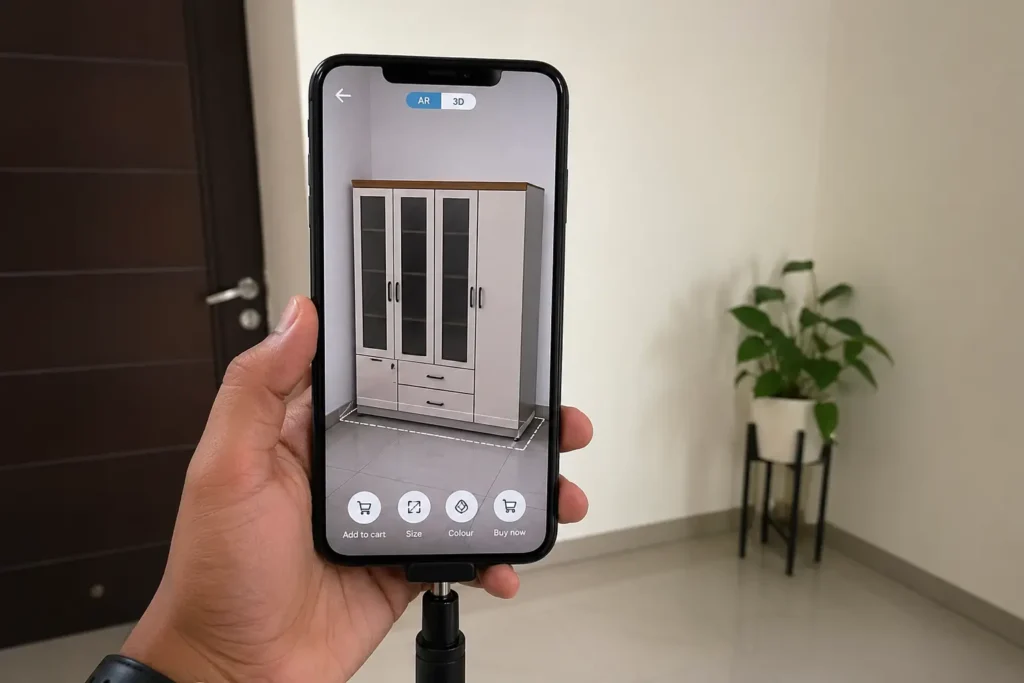
What Is AR for Wardrobes and Storage Furniture?
AR for Wardrobes and Storage Furniture is an augmented reality technology that enables customers to place a full-scale 3D model of a wardrobe or storage unit in their room using a smartphone or tablet. By simply tapping a “View in Your Room” option on a product page, users can see how the furniture fits within their space. The AR system accurately scales the product based on its real dimensions and allows users to move, rotate, and position it freely. This gives customers a practical understanding of how the wardrobe will look and function in their home, eliminating the need for guesswork.
Why Wardrobes Are Difficult to Buy Online
Wardrobes are among the most challenging furniture items to purchase online because they involve multiple practical considerations. Unlike sofas or tables, wardrobes are often placed against walls and need to fit within fixed room dimensions. Customers worry about whether the wardrobe will block pathways, clash with other furniture, or make the room feel crowded. Depth is a major concern, as deeper wardrobes provide more storage but take up more usable space. Additionally, door mechanisms—whether hinged or sliding—play a crucial role in usability. Without proper visualization, customers find it difficult to assess these factors, leading to hesitation and delayed purchases.
Solving Depth Issues with AR Visualization
One of the most important benefits of AR for Wardrobes and Storage Furniture is its ability to solve depth-related concerns. Customers can place the wardrobe in their room and instantly see how much space it occupies. They can check whether the depth leaves enough room for walking, opening doors, or placing additional furniture nearby. This is especially useful in smaller rooms where every inch matters. Instead of relying on numbers and measurements, customers get a real-world perspective that helps them make accurate decisions.
Understanding Door Swing and Accessibility
Door functionality is a critical factor when selecting wardrobes, and it is often overlooked in traditional online shopping experiences. Hinged doors require additional clearance to open fully, while sliding doors need proper alignment and track space. With AR for Wardrobes and Storage Furniture, customers can visualize how doors will operate in their room. They can check if the doors will hit a bed, wall, or other furniture, and determine whether the wardrobe design suits their layout. This feature ensures that customers choose products that are not only visually appealing but also practical to use.
Managing Room Constraints Effectively
Every room has unique constraints such as corners, ceiling height, window placement, and existing furniture arrangements. AR allows customers to experiment with different wardrobe placements and find the best position within these limitations. They can move the wardrobe around the room, test various sizes, and see how it interacts with other elements. This level of flexibility helps customers plan their space more effectively and avoid costly mistakes.
Enhancing Storage Planning and Functionality
Beyond external fit, wardrobes also play a crucial role in storage organization. Customers often think about how much storage space they need and whether the wardrobe design meets their requirements. While AR primarily focuses on external visualization, it also helps customers choose the right size and configuration based on their space. When customers feel confident about both storage capacity and room fit, they are more likely to complete their purchase.
Improving Customer Confidence and Reducing Hesitation
When customers can see exactly how a wardrobe fits and functions in their room, their confidence increases significantly. AR for Wardrobes and Storage Furniture removes uncertainty and replaces it with clarity. Buyers no longer need to imagine how the product will look—they can experience it virtually. This reduces hesitation at the decision-making stage and leads to faster conversions.
Reducing Returns and Installation Challenges
Wardrobes are large, heavy, and often require assembly or professional installation. Returns can be costly and inconvenient for both customers and brands. Many returns happen because the wardrobe does not fit properly or creates usability issues after installation. AR helps prevent these problems by allowing customers to verify fit and functionality before purchase. This leads to fewer returns, lower logistics costs, and higher customer satisfaction.
Increasing Engagement on Ecommerce Platforms
AR for Wardrobes and Storage Furniture transforms product pages into interactive experiences. Customers can explore different wardrobe styles, sizes, and finishes in real time. They can compare options and visualize how each one fits in their room. This increased engagement keeps users on the website longer and improves the chances of conversion. Interactive experiences also create a stronger emotional connection with the product, making customers more likely to buy.
Supporting Mobile-First Shopping Behavior
Today, most furniture shopping happens on mobile devices, and AR is perfectly suited for this trend. Customers can use their smartphone camera to try wardrobes in their room anytime and anywhere. This eliminates the need to visit physical stores and makes the shopping process more convenient. Mobile-friendly AR experiences also help brands reach a wider audience and capture more conversions.
Why Furniture Brands Are Investing in AR
Furniture brands are adopting AR for Wardrobes and Storage Furniture to address real customer pain points and improve the online shopping experience. By offering AR features, brands can reduce hesitation, increase trust, and stand out in a competitive market. Customers are more likely to choose brands that provide tools to help them make informed decisions. This not only improves conversions but also builds long-term customer loyalty.
Future of AR in Storage Furniture Ecommerce
The future of AR for Wardrobes and Storage Furniture is becoming more advanced with the integration of AI and 3D technologies. Features like automatic room measurement, smart placement suggestions, and realistic lighting simulations will make the experience even more accurate. Customers will be able to see how wardrobes look under different lighting conditions and how they interact with other furniture. These advancements will further enhance confidence and make online furniture shopping more reliable.
Conclusion
AR for Wardrobes and Storage Furniture is solving some of the most complex challenges in furniture ecommerce, including depth issues, door swing concerns, and room constraints. By providing real-time visualization, it helps customers make better decisions and reduces hesitation. For furniture brands, AR is not just a technological upgrade—it is a strategic tool that improves conversions, reduces returns, and enhances customer experience. As e-commerce continues to evolve, AR will play a key role in shaping the future of furniture shopping.
FAQ
What is AR for Wardrobes and Storage Furniture?
It is a technology that allows customers to place virtual wardrobes in their room using augmented reality.
How does AR help with wardrobe depth and space?
It shows how much space the wardrobe occupies and whether it fits comfortably in the room.
Can AR help with door swing issues?
Yes, it allows customers to visualize how wardrobe doors will open and whether there is enough clearance.
Does AR reduce furniture returns?
Yes, it helps customers make accurate decisions, reducing the chances of returns.