
AR for Jewelry Brands: Does It Increase Conversion, AOV, and Buyer Confidence?
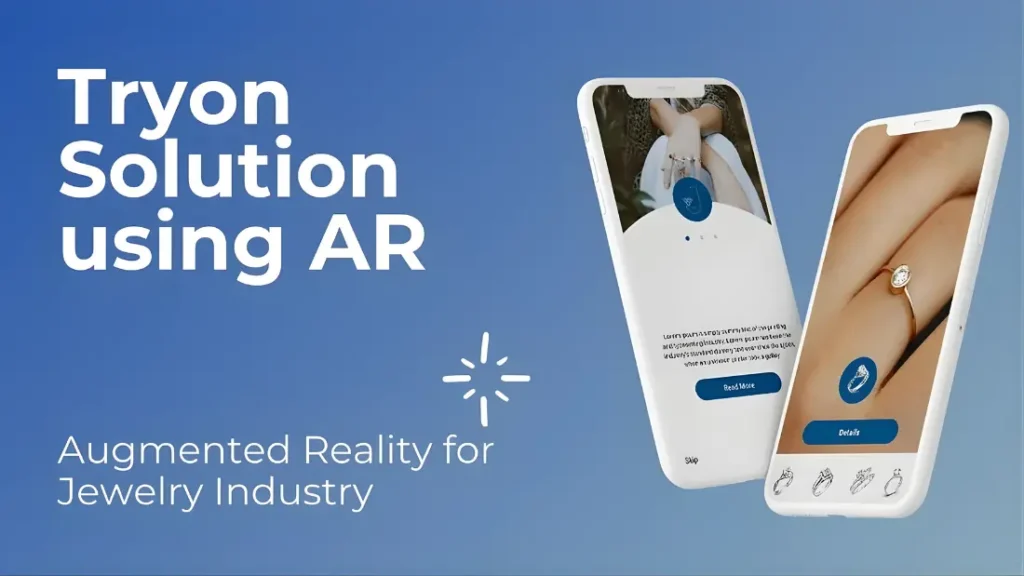
Jewelry shoppers hesitate because they cannot reliably judge look, scale, style fit, and real-world presence from static photos. AR for jewelry brands improves the post-click decision moment by answering: “How will this ring/earring/necklace look on me right now?” This often increases PDP engagement and add-to-cart, and can lift conversion and sometimes AOV when shoppers feel confident choosing premium options. AR is not a magic button — results depend on model accuracy, lighting realism, traffic intent, and overall PDP UX.
What This Article Covers for AR for Jewelry Brands
- The main hesitation triggers in online jewelry shopping (fit/look/size/style)
- Where AR try-on creates the strongest lift (rings, earrings, necklaces, bundles)
- Conversion + AOV mechanisms (why confidence increases revenue per visitor)
- Implementation options and cost/complexity ranges (light, mid, advanced)
- A 30-60 day pilot strategy (what to launch, how to measure, what “good” looks like)
The Core Problem: Jewelry Has High Visual Uncertainty on PDPs
Quick answer: For jewelry, the buyer’s biggest friction is not product discovery. It’s the last-mile question: “Will this look right on me?” Photos show the item. They do not show the item on the buyer under the buyer’s lighting, skin tone, face shape, and style context. That uncertainty suppresses add-to-cart and pushes “save for later” behavior.
Hesitation Triggers (and What AR Fixes)
Scale confusion
“Is the ring too bulky? Are the studs too small?” Shows relative size on hand/ear/neckline; reduces scale guessing.
Style fit anxiety
“Does this suit my face/skin tone/outfit vibe?” Lets the shopper preview in-context and compare multiple pieces quickly.
Premium doubt
“Will it look as premium as the photos?”Better realism (lighting/shadows) increases confidence in higher-priced options.
Gifting risk
“Will this look good on her? Is it too flashy?” Shareable try-on snapshots and social proof loops support gifting decisions.
Bundle hesitation
“Do these earrings + necklace work together?” Mix-and-match try-on reduces mismatch anxiety and increases bundle intent.
What Is AR Try-On for Jewelry?
Definition: AR jewelry try-on is an interactive feature that places a digital version of a jewelry item (ring, earring, necklace, bracelet) onto the shopper’s live camera feed in real time, so they can preview how it looks on them before purchasing.
High-Impact Use Cases (Rings, Earrings, Necklaces)
- Rings: engagement rings, bands, statement rings. Biggest win: scale + hand presence + “is it too loud?” decisions.
- Earrings: studs/hoops/drops. Biggest win: face framing + “too long/too small” decisions.
- Necklaces: pendants, chains, layered looks. Biggest win: neckline fit + layering confidence.
- Mix-and-match: recommend sets (earring + pendant) and allow one-tap switching to increase AOV via bundles.
Gifting: AR snapshot share to partner/friends to reduce gifting anxiety and increase purchase Completion.
Does AR Increase Conversion and AOV? The Mechanisms
Direct answer: AR can increase conversion when it reduces uncertainty at the decision moment. It can increase AOV when shoppers feel comfortable choosing higher-ticket variants (larger stones, premium finishes) or buying bundles.
Metric Typical issue without AR
How AR changes buyer behavior
- PDP engagement
- Passive scrolling; quick exits
- Active exploration (camera try-on) increases time and intent
- Add-to-cart
- Hesitation about look/scale
- Confidence nudges the shopper from “maybe” to “add to cart”
- Conversion rate
- Uncertainty + decision delay
- More buyers complete because they feel sure
- AOV (sometimes)
- Shoppers default to cheaper option
- Higher confidence supports upsell or set purchases
- Returns (sometimes)Expectation mismatch on size/look
- Better pre-purchase understanding reduces surprises
A Simple ROI Framework
Profitability per 1,000 visitors ≈ (Visitors × Conversion Rate × AOV × Gross Margin) − Ad Spend − Returns impact. AR typically improves the middle of the equation by increasing conversion confidence and sometimes AOV. The correct strategic framing is often AR plus paid traffic, not AR replacing ads.
Illustrative example (not guaranteed): If 10,000 visitors/month convert at 1.0% with AOV $120, that’s 100 orders and $12,000 revenue. If AR on best-selling rings/earrings raises conversion to 1.2% and AOV to $128 via bundles, that’s 120 orders and $15,360 revenue — from the same traffic base.
Implementation Options and Cost/Complexity (Practical)
Implementation level What you ship Best for Complexity
Light – AR try-on on 10-30 hero SKUs; simple CTA + tracking events Proof-of-value pilot
Low, Mid – AR + mix-and-match sets + PDP experiment routing + analytics dashboard Growth-stage brands scaling paid Medium
Advanced – High-fidelity models, material realism, variant swaps, personalization, multi-category try-on Large catalogs / premium brands High
Pilot Strategy (30-60 Days): The TouchTry-style Rollout
Goal: Prove lift on real traffic without disrupting existing revenue.
Approach: Keep ads running, deploy AR on high-traffic/high-margin SKUs, and compare outcomes to a control set.
- Select SKUs: Start with top 10-20 by traffic and margin (rings + best-selling earrings are ideal).
- Define success metrics: AR opens, engagement time, ATC rate, CVR, AOV, and return reasons where available.
- Placement: Put AR CTA above the fold on PDP (near gallery + variant selector).
- Experiment design: Compare AR-enabled PDPs vs non-AR PDPs; if possible, run a split test on the same SKU.
- Creative routing: Send a portion of paid traffic directly to AR-enabled PDPs (ads that mention “Try it on”).
- Iteration loop: Improve model realism, sizing accuracy, and CTA phrasing based on user behavior and feedback.
When AR Will NOT Help (Reality Check)
Quick answer: AR underperforms when fundamentals are broken. Fix these first: slow pages, weak photography, unclear pricing/offer, missing trust signals (reviews/UGC), poor checkout UX, or inaccurate/glitchy AR.
FAQ of AR for Jewelry Brands
Does AR always increase conversion for jewelry?
No. It usually helps most when shoppers have strong look/scale hesitation and when the AR experience is accurate and fast. If traffic is low-intent or PDP trust is weak, the lift may be small.
Will AR increase AOV?
Sometimes. The most common AOV lift comes from higher confidence in premium variants and from bundling (sets). It’s not guaranteed and should be measured.
Which jewelry products should get AR first?
Start with hero SKUs where the shopper needs to see it on themselves: rings, statement earrings, and best-selling necklaces. Then expand to sets and gifting flows.
What should we measure in the pilot?
AR interaction rate, engagement time, add-to-cart rate, conversion rate, AOV, and return reasons (especially expectation mismatch).
Final Takeaway of AR for Jewelry Brands
For jewelry, confidence is the fastest route to conversion. AR try-on is a practical way to reduce the “I can’t tell if it will suit me” problem that kills add-to-cart on PDPs. Treat AR like a measurable conversion layer: start with a pilot, validate lift, then scale to more SKUs and bundles.